
Know Before You Buy
A half beef often puts 200–300 pounds of packaged meat in your freezer. Here’s what that means, how a quarter compares, and what to ask before you buy.

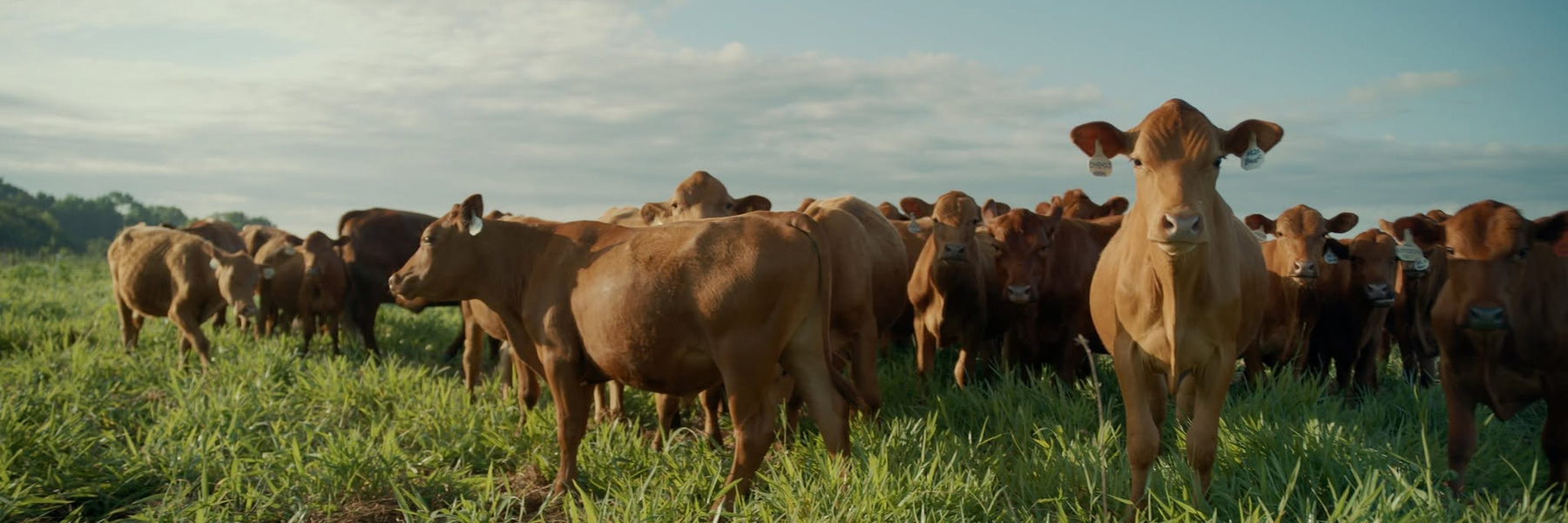
How much meat comes with half a cow? See typical take-home pounds, quarter vs. half beef, freezer space, cuts to expect and how to find local beef farms near you.
Updated October 21, 2026.
Buying half a cow sounds simple enough.
There is a cow. You buy half. You get half the beef.
Then somebody mentions live weight, hanging weight, processing weight, cut sheets and freezer space, and suddenly buying dinner sounds like agricultural math.
Here is the part that matters: a half cow will often put roughly 200 to 300 pounds of packaged beef in your freezer. For a fairly typical finished beef animal, around 275 to 285 pounds can be a useful ballpark, although the actual number can move quite a bit.
If you are looking for a farm that sells beef by the quarter, half or whole, skip the scattered Facebook hunting and start with Farm Allegiance Find a Farm. Search by ZIP code, distance and Beef, then open the farm profile to see how that farm actually sells.
The University of Nebraska gives a useful example. A 1,400-pound beef animal can produce an 880-pound hot carcass. After chilling, trimming and processing, that example yields about 570 pounds of packaged beef.
Split that in half and you are looking at roughly 285 pounds of beef.
That is a lot of burgers. It is also nowhere near 700 pounds, which is where first-time buyers often get confused.
Read the University of Nebraska beef-yield guide →
A 1,400-pound steer does not turn into 1,400 pounds of steaks.
The live animal includes the hide, head, internal organs and other material that will not become packaged beef. Once those are removed, you have the carcass — often called the hanging weight.
For many finished cattle, hot carcass weight is about 60% to 64% of live weight. In Nebraska’s 1,400-pound example, the hot carcass is about 880 pounds.
Half of that is roughly 440 pounds hanging weight.
But you are still not bringing home 440 pounds of meat.
The carcass still contains bone, fat and moisture. The beef loses moisture while chilling and aging. The butcher trims it. Your cut instructions change the final yield.
Nothing vanished. It just was not all dinner.
Here is the easiest way to remember it:
Take-home weight is the number families care about most.
But many farms price freezer beef by hanging weight. That means a farm advertising a price per pound may not be talking about the pounds you eventually carry home.
Before putting down a deposit, ask exactly what the farm’s price is based on and whether processing is separate.
A half beef is not one gigantic pile of hamburger.
Depending on the animal, processor and your cut sheet, your freezer may contain ribeyes, New York strips, sirloin steaks, tenderloin, chuck roasts, round roasts, brisket, short ribs, stew meat, soup bones and plenty of ground beef.
And yes, there will usually be a lot of ground beef.
Your cut sheet helps determine what happens to the animal. Do not want certain roasts? Ask whether they can be ground. Want more bone-in cuts? Say so. Want soup bones or organ meat? Ask before processing.
The cut sheet is not paperwork designed to punish first-time buyers. It is your instruction sheet for turning a side of beef into food your family will actually cook.
One neighbor gets 280 pounds. Another gets 230. That does not automatically mean somebody made a mistake.
The final number changes because of:
Penn State Extension notes that fabrication choices — especially bone-in versus boneless — can significantly change how many pounds a customer receives.
See Penn State’s explanation of beef carcass yield →
For plenty of families, a quarter cow is the smarter first move.
You still get a serious amount of beef without committing as much money or freezer space.
A reasonable working range is roughly 100 to 150 pounds of packaged beef, depending on the animal and processing.
University of Minnesota Extension gives an example of a quarter from a 1,300-pound animal producing about 142 pounds of beef. Its example includes steaks, roasts and roughly 35 to 60 pounds of ground beef.
See the University of Minnesota quarter-beef guide →
Use these numbers for planning, not as a promise:
The farm you buy from should be able to give you a better estimate based on its cattle, processing setup and typical customer orders.
Do not assume every quarter beef works the same way.
Some farms sell a split quarter, where the cuts from a side are divided between two customers so each receives a more balanced assortment. Other buying arrangements can differ.
Before paying a deposit, ask one simple question:
“How does your quarter beef work, and what cuts should I expect?”
That question can save you a surprise at pickup.
This is the question to answer before pickup day.
University of Nebraska recommends roughly:
Give yourself some room. Your freezer probably needs to hold something besides beef.
Maybe.
And that is fine.
Buying directly from a farmer is not a contest to see who can own the most ground beef in South Carolina.
If your family cooks beef several nights a week, grills often, has children at home or wants to replace most grocery-store beef with farm-direct beef, a half may make sense.
If there are two of you and steak appears twice a month, a quarter — or even a smaller beef box — may be the better first purchase.
A farm that regularly sells freezer beef has heard these questions before. Ask them.
This is where Farm Allegiance is useful.
The hard part is not knowing that cattle exist. The hard part is figuring out which farms sell directly to families, what share sizes they offer, how to order, where pickup happens and whether anything is available now.
Use Find a Farm to search by ZIP code, distance and what the farm sells. Choose Beef, then open the farm profile for buying details.
Availability changes. Always check the Farm Allegiance profile and contact the farm before making a dedicated trip.
Chucktown Acres currently publishes whole, half and quarter shares of its grass-fed, grass-finished beef. Its Farm Allegiance profile lists approximate share sizes of about 400 pounds for a whole, 200 pounds for a half and 100 pounds for a quarter, with current reservation and pickup details.
Coastal Cattle Company raises Angus and Wagyu cattle in Summerville and sells beef directly to families. Its current offering includes individual cuts, beef boxes and larger freezer-share options, with scheduled farm pickup.
Cooper Family Farms raises South Poll cattle in Pinewood and currently lists whole, half and quarter beef shares for preorder. The farm estimates roughly 400 pounds for a whole, 200 pounds for a half and 100 pounds for a quarter, with actual yield varying.
Carolina Grassfed Beef raises grass-fed, grass-finished Hereford beef in Anderson. The farm offers individual beef cuts and takes customers for half and whole beef through a waitlist. Quarter beef is not currently offered, so call ahead before planning a bulk order.
These are only a starting point. Search all Farm Allegiance beef farms →
A directory tells you which farms exist.
The Farm Ledger tells you what is happening now.
Beef boxes come available. Quarter and half-beef reservations open. Pickup dates change. Farms post new prices, seasonal bundles and preorder deadlines.
Farm Allegiance publishes regional Farm Ledgers so families can see current farm availability, published prices when available, pickup information, events and direct buying links without hunting across dozens of websites and social posts.
Start with the South Carolina Farm Ledger, then choose your region:
If someone tells you they are buying half a cow, do not picture 700 pounds of meat landing on the porch.
For many animals, think more like 200 to 300 pounds of packaged beef for a half and roughly 100 to 150 pounds for a quarter.
The exact number depends on the animal, trimming, aging and how you ask the processor to cut it.
The smartest move is not memorizing every percentage.
Find a good local farm. Ask how its shares work. Understand what you are paying for. Then make room in the freezer.
Know Your Farmer. Know Your Food.