Food Transparency
Ground beef used to be the practical family protein. Now it feels expensive. The real story starts long before the grocery meat case.

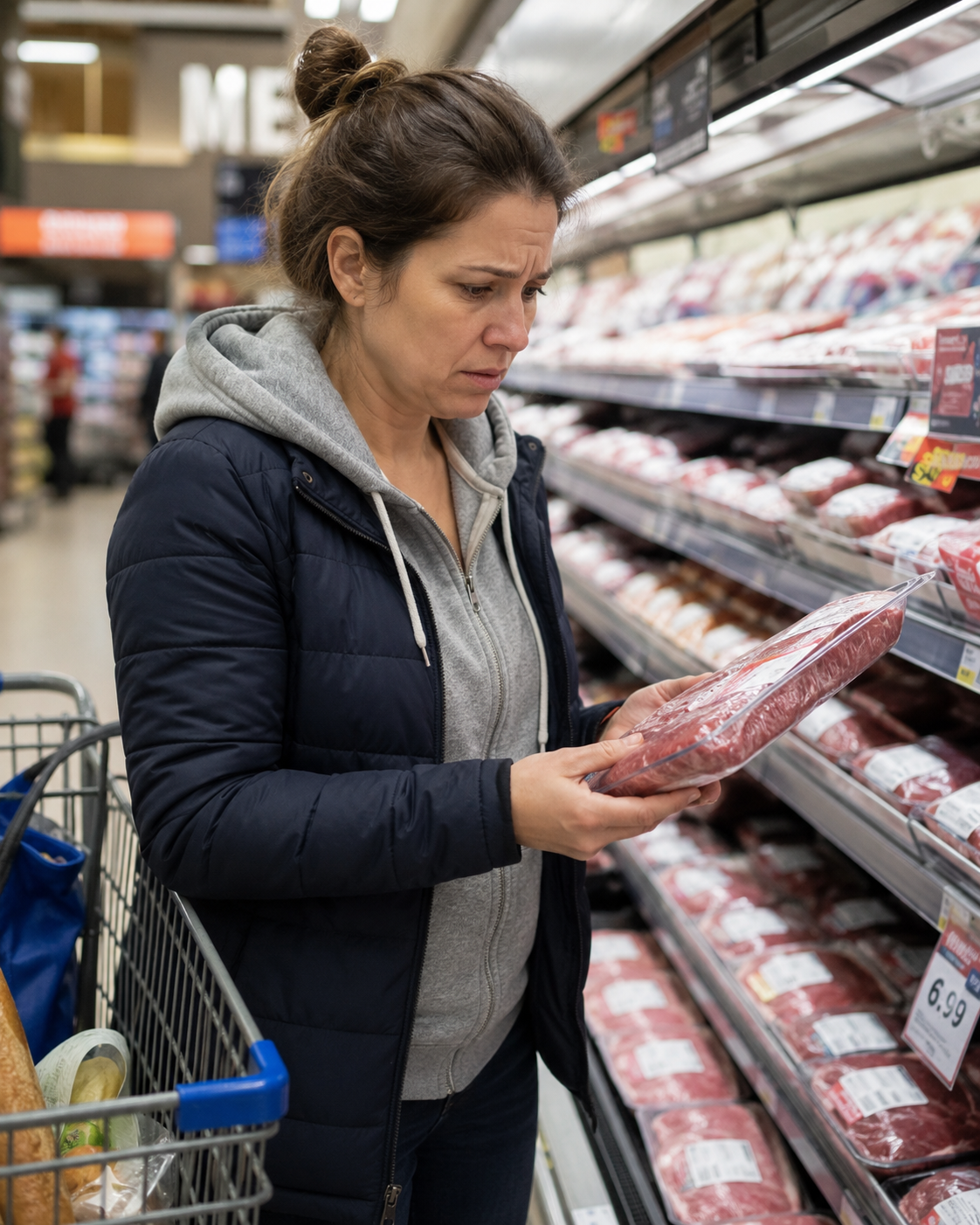
Beef prices are high because America has fewer cattle, tight processing capacity, and confusing labels. Here’s what families should know.
Families notice when cereal boxes get smaller. They notice when eggs spike. They notice when milk creeps up.
But beef lands differently.
Beef is tied to family rhythm. It is burgers after a long week. Chili in the slow cooker. Sunday sauce. A cookout. A weeknight dinner when everyone is tired and nobody wants to think too hard.
That is why ground beef hurts the most.
Steak has always felt like an occasion. Ground beef was supposed to be practical. It was the fallback protein families could count on.
So when ground beef starts feeling expensive, families do not experience it as a luxury getting pricier.
They experience it as ordinary life getting harder.
And that is the emotional truth behind the price tag.
Families are not only paying more. They are paying more while knowing less about where their beef came from, who raised it, who processed it, and why the price changed so much before it reached the shelf.
The biggest reason beef costs more right now is simple: supply is tight.
At the start of 2026, USDA reported 86.2 million cattle and calves in the United States. Beef cows totaled 27.6 million head, down 1% from the previous year.
That matters because beef is not chicken.
Chicken production can expand much faster. Cattle take years.
A rancher who decides today to rebuild a herd is not sending more beef to the grocery store next month. Heifers have to be kept instead of sold. They have to be bred. Calves have to be born, raised, finished, transported, processed, boxed, shipped, and sold.
That takes time.
This is why beef prices do not behave like a light switch. When the cattle herd contracts, the country cannot simply refill the meat case overnight.
It has to rebuild biology.
And biology moves slower than grocery ads, politics, and consumer anger.
Years of drought, higher feed costs, land pressure, fuel costs, labor costs, and interest rates forced many ranchers into hard decisions. Some sold cattle they would have preferred to keep. Some reduced herd size just to survive.
The cruel part is that some of the animals sold during hard years are the same animals needed to rebuild the herd later.
When breeding females leave the herd, the country may get more short-term beef, but it loses long-term production capacity.
That tradeoff is invisible to shoppers.
But eventually, it shows up in the meat case.
When beef gets expensive, ground beef becomes the emotional breaking point.
A family can skip ribeyes.
A family can buy fewer roasts.
But ground beef is different. It is the flexible, familiar, everyday option. It stretches across tacos, pasta, burgers, casseroles, soups, and meal prep.
In May 2026, the average U.S. city price for 100% ground beef was $6.745 per pound, according to Bureau of Labor Statistics data published by FRED. BLS regional table data also showed 100% ground beef up 12.8% year over year.
That is why this feels personal.
Families are not just watching a premium cut move higher. They are watching the practical protein become harder to justify.
That changes how people shop. They compare labels longer. They stretch meals further. They wonder if the cheaper package is still good enough. They wonder whether buying direct from a farm is worth it.
Most of all, they wonder why the grocery label still does not explain very much.
When prices rise, families naturally ask who is getting rich.
Someone may be.
But it is usually not the small rancher.
A rancher can sell cattle at higher prices and still be under serious financial pressure. Feed is higher. Land is higher. Equipment is higher. Labor is harder to find. Interest rates make expansion expensive. Drought can turn pasture into a liability.
Then come fencing, fuel, veterinary care, insurance, trucking, minerals, hay, taxes, equipment repairs, and processing access.
The public sees the retail price.
The rancher sees the operating cost.
That gap is where the anger begins.
Families assume ranchers must be thriving because beef is expensive. Ranchers look at their own books and see a business that may not survive another bad season.
The supermarket collapses all of this into one package, one label, one price.
It hides the distance between the person who raised the animal and the corporate system that moved it to the shelf.
That distance is the real story.
From the outside, the beef supply chain looks simple.
A cow is raised. Beef is processed. A family buys it.
But the real system is more concentrated.
On one side are ranchers, many of them family operations managing weather, debt, land, animals, and limited leverage.
On the other side are families, restaurants, and retailers trying to manage food costs.
Between them sits one of the most powerful parts of the system: slaughter and processing.
USDA’s Economic Research Service reported that the four largest meatpacking firms handle 85% of all steer and heifer purchases.
That does not mean every high beef price is caused by wrongdoing. Drought is real. Cattle cycles are real. Feed costs are real. Labor problems are real. Processing costs are real.
But concentration changes the character of a food system.
It can make the system efficient when everything goes right and brittle when anything goes wrong.
A plant fire, labor disruption, pandemic, border issue, disease threat, or cattle shortage can ripple through the country quickly because so much volume moves through so few doors.
Consumers experience the result as price.
Farmers experience it as leverage.
Small processors experience it as impossible competition.
Local communities experience it as disappearance.
Older Americans remember a different food map.
More towns had local butcher shops. More regions had small slaughterhouses. More farmers had practical access to processing. More families knew who raised their food, or at least knew someone who knew.
That world did not vanish overnight.
It was slowly priced, regulated, consolidated, and centralized out of daily life.
Food safety rules were necessary. The early meatpacking industry had real abuses. Federal inspection was not some luxury. It came from legitimate public concern.
But over time, the economics of compliance favored scale.
A large processor can spread inspection costs, equipment, waste management, refrigeration, labor, insurance, legal risk, and transportation across enormous volume.
A small local processor cannot.
The same rulebook may apply to both, but the burden does not land equally.
The result is a familiar American pattern: rules written for safety, economics shaped by scale, power captured by the largest actors, and small operators left fighting from the margins.
Today, many farmers can raise excellent animals but still struggle to find reliable processing appointments. Some book months ahead. Some drive long distances. Some cannot expand direct beef sales because processing capacity is the bottleneck.
That is the absurdity.
Families want local beef.
Farmers want to sell local beef.
But the middle of the system often makes the connection harder than it should be.
When families cannot know the farmer, they look to the label.
But beef labels have their own history, and it is more complicated than most shoppers realize.
For years, the fight over beef labeling has been a fight over trust: who gets to define American, who benefits from consumer confidence, and how much origin information shoppers are allowed to see.
The phrase “Product of USA” once created confusion because many shoppers assumed it meant the animal was born and raised in America.
In practice, origin claims could be more complicated than that.
To a shopper, “Product of USA” sounds like origin.
In the modern beef system, that distinction matters.
It is the difference between a family believing they are supporting American ranchers and a system using American processing to borrow American trust.
USDA has now tightened the voluntary “Product of USA” rule. Under the final rule, meat, poultry, and egg products using that claim must come from animals born, raised, slaughtered, and processed in the United States.
That is progress.
But the claim is still voluntary.
That means the consumer still has to notice it, understand it, know what it excludes, and trust the system behind it.
That is too much work to put on a parent trying to buy dinner after work.
Supermarkets are designed to make abundance feel normal.
The lights are bright. The shelves are full. The packaging is clean. The words are reassuring.
Natural.
Choice.
Premium.
Fresh.
Family pack.
Butcher’s selection.
The store creates the feeling of trust even when it cannot always provide the substance of trust.
Most shoppers do not know where the animal was born. They do not know where it was raised. They do not know if it crossed borders. They do not know who processed it. They do not know how many companies handled it before it reached the cooler.
Instead, they are offered symbols.
A farm image.
A cowboy word.
A rustic font.
A red, white, and blue design.
A phrase that sounds close enough to what they want to believe.
That is how modern food marketing often works.
It gives families the emotional satisfaction of connection without giving them an actual connection.
The meat case does not merely sell beef.
It sells the idea that someone trustworthy has already asked the hard questions.
Increasingly, families no longer believe that.
There is no single solution to high beef prices.
Anyone who says otherwise is selling something.
The cattle herd cannot be rebuilt overnight. Drought cannot be legislated away. Processing capacity cannot be restored with a slogan. Labels cannot repair trust unless consumers understand them and regulators enforce them.
And local farms cannot replace the entire national beef system tomorrow.
But families can start asking better questions.
Not just: how much is this beef?
Ask: where did it come from?
Not just: is this on sale?
Ask: who raised it?
Not just: is this American?
Ask: was it born, raised, slaughtered, and processed here?
Not just: why is this expensive?
Ask: who has power in this system, and who disappeared from it?
That is where the next food movement will come from.
Not panic.
Not nostalgia.
Not another empty label.
It will come from families deciding that trust is worth rebuilding.
Most families want better food.
Most families want to support local farms.
But hunting through scattered Facebook posts, farm websites, Instagram stories, farmers market pages, and word-of-mouth recommendations every week is exhausting.
Convenience wins because finding local food has become too complicated.
Farm Allegiance was built to solve that problem.
Every week, we publish The Farm Ledger, a free email that helps families find current local farm food options in one clear place.
That includes beef bundles, seasonal produce, eggs, dairy, CSA shares, market schedules, and direct ordering links from trusted farms.
We do not hold inventory.
We do not replace the farmer.
We do not make families buy through a mystery middleman.
We help families see what is available, understand who is behind it, and connect directly with the farms raising and growing the food.
Farmers get visibility.
Families get clarity.
Money moves closer to the people doing the work.
That is the point.
Beef prices may stay high while the national herd rebuilds.
Most families will still use grocery stores for part of their food. That is reality.
But you do not have to keep buying blind.
You can add one trusted layer between your family and the food system.
One weekly guide.
One clearer way to see what nearby farms actually have available.
One small step back toward knowing where your food comes from.
Join this week’s Farm Ledger for free and see current local beef bundles, farm-fresh options, and direct ordering links from producers near you.
Less time doing math in the meat aisle.
More clarity about where your food comes from.
Know your farmer. Know your food.
Beef is expensive because the U.S. cattle herd is smaller, rebuilding takes years, and ranchers are facing higher costs for feed, land, labor, fuel, equipment, and financing. Tight processing capacity and concentrated packing power also affect how beef moves through the system.
Not always. Local beef can cost more per pound than commodity beef, but many families get better value when they buy bundles directly from farms. They often waste less, plan meals better, and know more about how the animal was raised.
USDA’s updated voluntary rule says meat, poultry, and egg products using “Product of USA” or “Made in the USA” must come from animals born, raised, slaughtered, and processed in the United States.
Farm Allegiance publishes The Farm Ledger, a free weekly email that highlights local farm availability, including beef bundles, eggs, dairy, produce, CSA shares, market schedules, and direct ordering links.
No. Most families use a mix of grocery stores, farmers markets, and direct farm purchases. Farm Allegiance simply makes the local part easier, clearer, and more trustworthy.